Why Astro?
The project prioritized performance, SEO and low maintenance over complex client-side interactions.
Trade-off: Less ecosystem maturity than Next.js, but the zero-JS-by-default model fits a content-heavy marketing site.
Project detail
Static-first marketing site for a local welding company, built to improve search visibility and convert visits into contact requests.
Role
Product Design · Frontend Development · SEO · Content Architecture
Year
2026
Stack
Astro · Tailwind CSS · Decap CMS · Netlify Identity · Git Gateway · Google Analytics 4
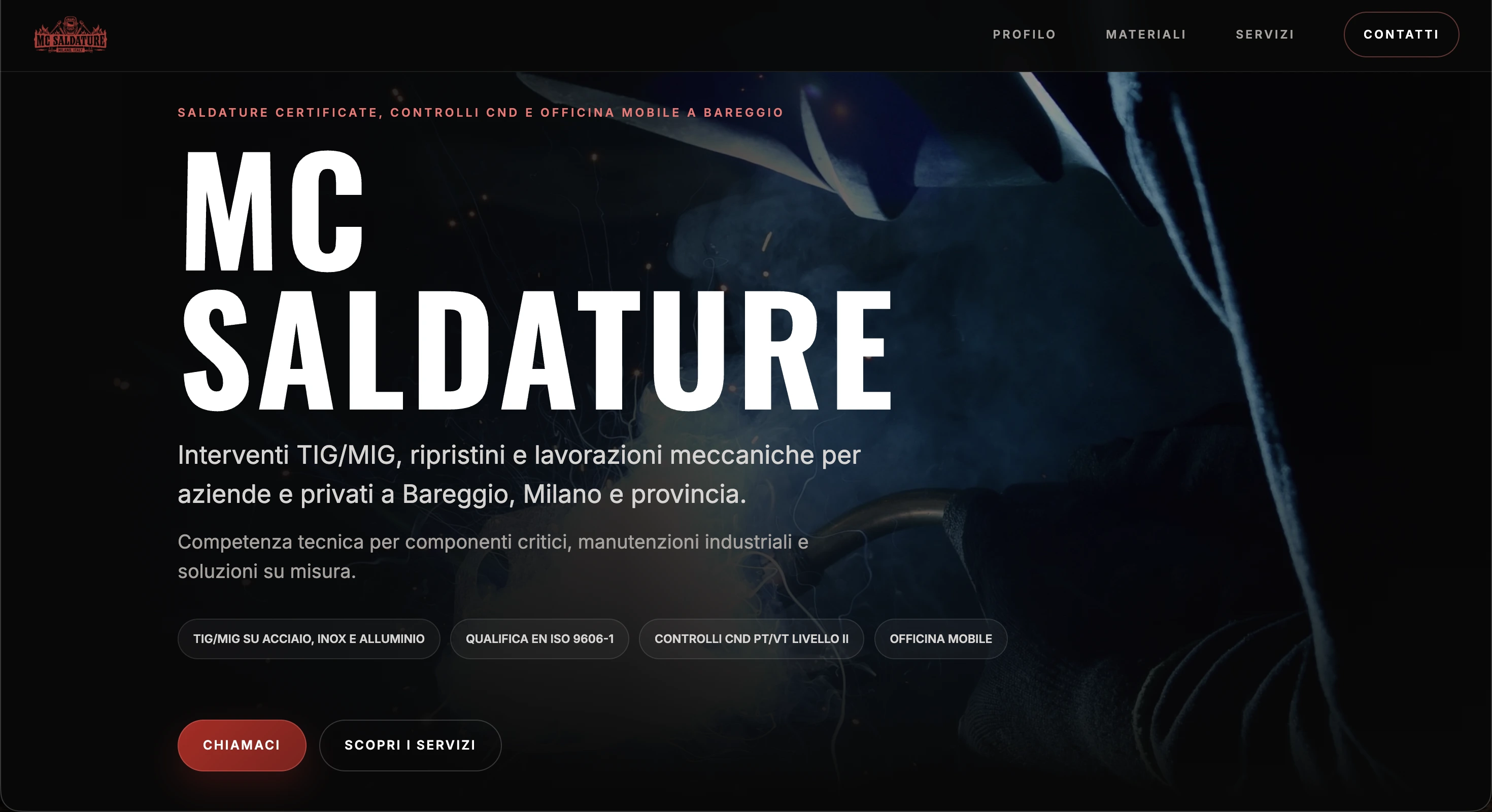
The public interface prioritizes service clarity and direct contact.
Overview
Problem
The company relied mainly on word of mouth and had no effective online presence. The goal was to clarify services, improve local discoverability and make contact immediate.
Constraints
Solution
A fast marketing website with clear service page sections, structured content and a low-friction path from search to contact.
Impact
Automated
Deployment
Client-managed
Content management
Static-first
Architecture
Key decisions
The project prioritized performance, SEO and low maintenance over complex client-side interactions.
Trade-off: Less ecosystem maturity than Next.js, but the zero-JS-by-default model fits a content-heavy marketing site.
The client needed editorial autonomy without introducing the complexity or cost of a traditional backend.
Trade-off: Git-based publishing is less familiar than a traditional CMS, but avoids hosting costs and vendor lock-in.
Netlify Identity provided a simple authentication layer for the admin flow and integrated with the Git-based publishing pipeline.
Trade-off: It ties the project to Netlify, but simplifies deployment and fits the client's needs.
Implementation
The implementation focused on three areas:
Workflow
The workflow reduces developer involvement in routine content edits.
Admin edit
The client updates text through the admin interface
→ No developer dependency for routine changes
Decap CMS save
The content change is saved through the CMS workflow
→ Version-controlled content with rollback capability
GitHub update
The change is committed to the repository
→ Full audit trail of every content change
Automatic deploy
A new production build is triggered automatically
→ Changes go live in under 60 seconds
Selected views
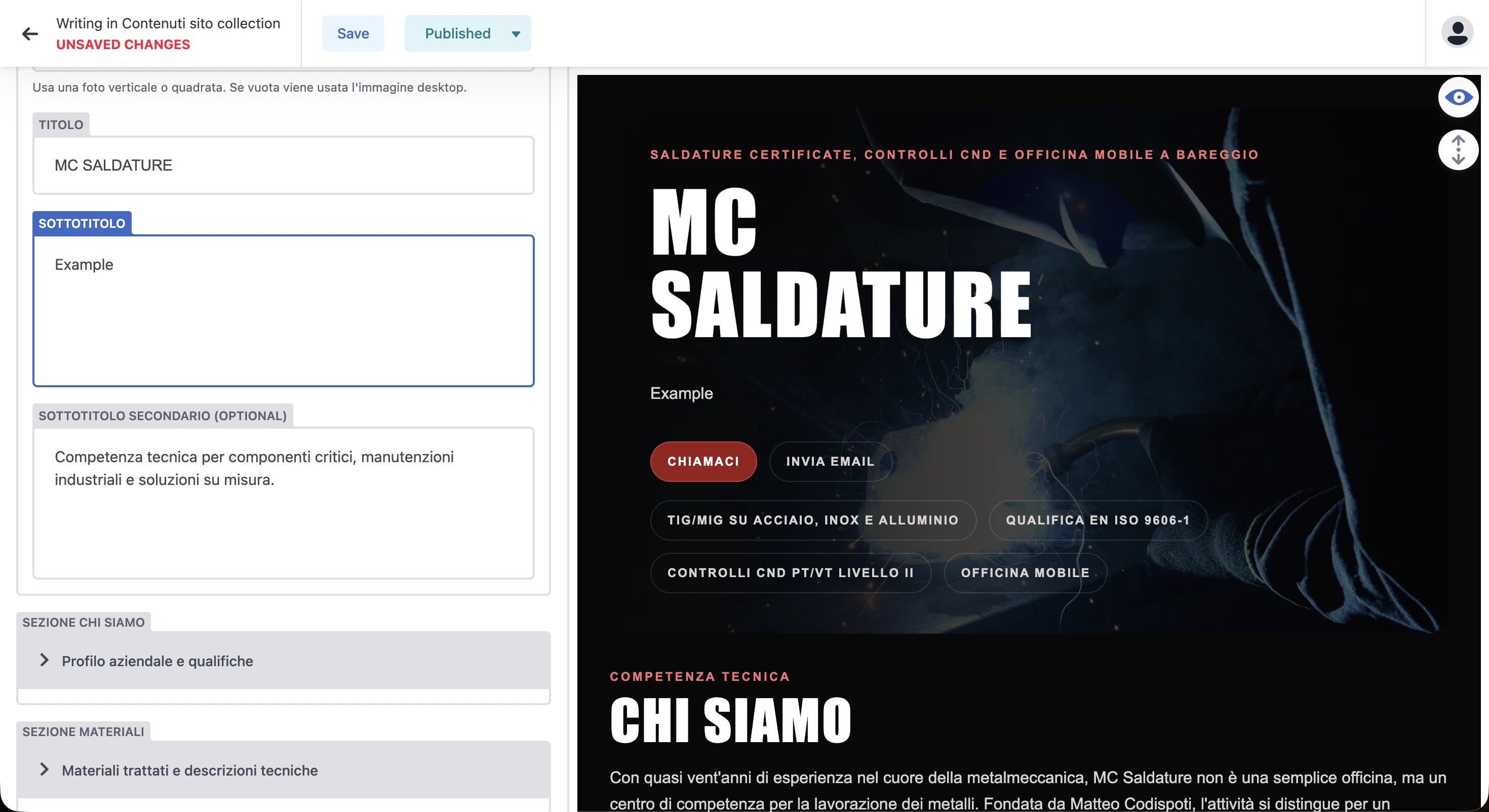
Lessons learned
Next steps
Core architecture is ready for production. Remaining work: final content validation, launch preparation and post-launch monitoring.
Future improvements